Do you feel like your ad spend is fruitless? You might be making these ten (10) Facebook Ads Targeting mistakes that kill conversions. Learn how to fix them and start running profitable ads today.
Why Your Facebook Ads Are Failing (And How to Fix It)
Normally, a well-targeted Facebook ad campaign aims to get an influx of leads and sales. What happens when all you get is low engagement with the ads, rising CPC and clicks that don’t convert?
Your Facebook Ads targeting is the problem. Many advertisers struggle to get targeting right. Over 50% of marketers admit they don’t fully understand Facebook’s targeting system.
Let’s break it down, step by step.
In this guide, I’ll show you ten (10) common targeting mistakes that silently drain your ad budget and how you can fix them. By the time you’re done reading, you’ll know exactly how to target the right audience for better conversions and lower costs.
Five (5) Reasons Your Facebook Ads Aren’t Converting and How to Fix Them
Ten (10) Common Facebook Ads Targeting Mistakes That Cost You Money
The following are the top ten (10) mistakes that you should avoid;
- Targeting Too Broad an Audience
- Relying only on Interests Targeting
- Not Using Custom Audiences for Retargeting
- Forgetting to Exclude Irrelevant Audiences
- Running Only One Audience Without Testing
- Ignoring Lookalike Audiences
- Overlapping Audiences
- Targeting the Wrong Locations
- Not Targeting Buyer Intent Signals
- Ignoring Ad Fatigue
1. Targeting Too Broad an Audience
It’s a huge mistake to assume “the bigger your audience, the better your chances of converting.” It’s not always that way.
Facebook may work best when your audience is specific and well-defined. If your audience is too broad, Facebook may have no clear signals on who to show your ad to. The effect of targeting too broad an audience is:
- Wasted ad spend on uninterested people
- Low engagement and fewer conversions
- Higher costs per click and results
How do you target the right audience?
- Start with an audience size of about 500,000–2 million people, especially for broad campaigns.
- Use Facebook’s Detailed Targeting to narrow your audience by age, interests, and behaviors.
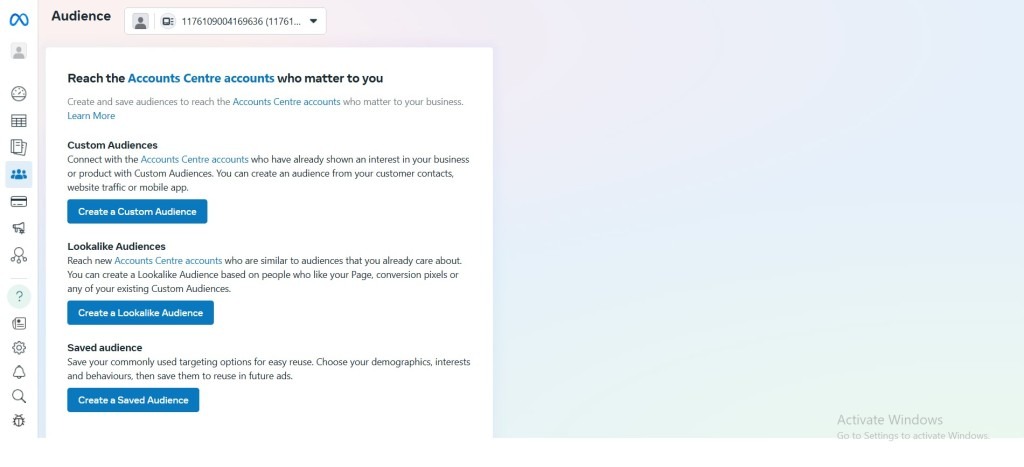
- Use Custom Audiences (e.g., website visitors or past customers) to target warm leads.
2. Relying Only on Interests Targeting
The Facebook interests feature might seem like an easy way to find potential customers, but Facebook’s interest data isn’t always accurate.
Many people are categorized into interests based on random interactions, not because they’re engaged with that topic.
Instead of relying only on Interests, use Lookalike Audiences. These are people similar to your best customers. You could also test Custom Audiences built from email lists, website visitors, or video viewers.
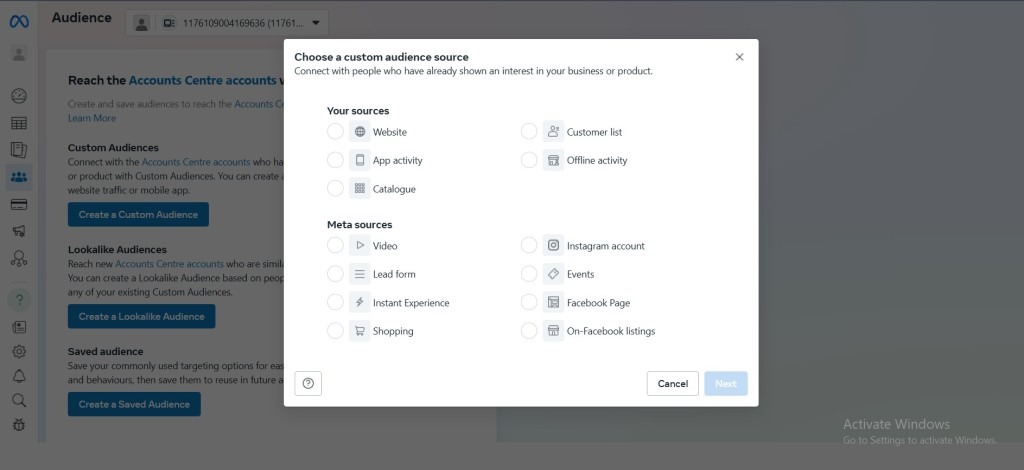
(Related: What Are Custom Audiences and How to Use Them in Facebook Ads)
3. Not Using Custom Audiences for Retargeting
98% of first-time visitor interactions with you might not result in what you want (a conversion). This is why retargeting is important. You spend more on cold audiences and less on the warmer prospects.
Have you ever visited a website, then saw an ad for that exact product later? That’s called retargeting, and if you’re not doing it, you’re losing easy sales.
How can I retarget my ads to the right audience, you ask?
- Install Facebook Pixel on your website to track visitors.
- Create Custom Audiences of: Website visitors (last 30–90 days), people who engaged with your page, users who abandoned checkout, etc.
Internal Link: Related: How to Run Facebook Ads for Your Business in Nigeria
4. Forgetting to Exclude Irrelevant Audiences
As soon as everyone becomes your audience, you are heading the wrong way in your ad campaign. Most advertisers focus on targeting the right people but forget to leave out the wrong ones.
Example: If you sell luxury goods, you don’t want your ads shown to customers who love bargaining, looking for cheap deals.
How can you fix this?
- Use Exclusions to remove users;
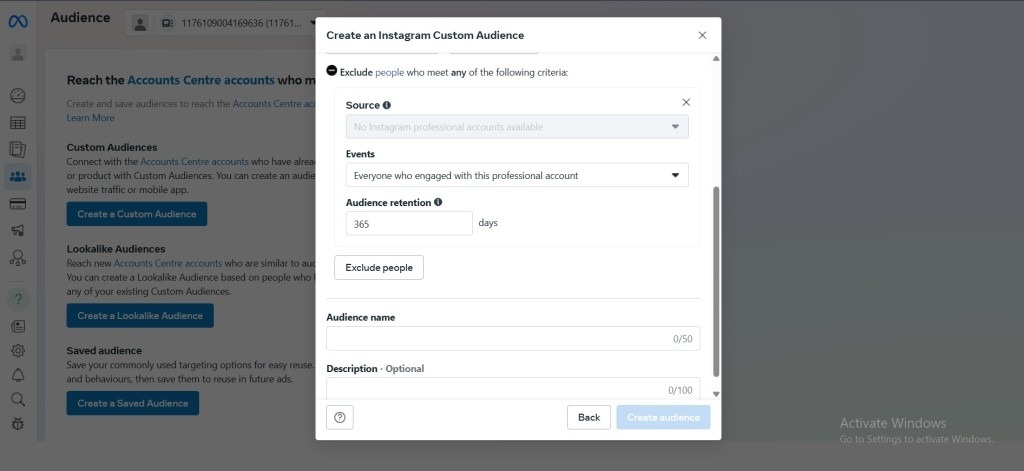
Remove users who already bought your product, engaged but didn’t convert after multiple attempts or showed interest in competitors but never purchased to avoid wasted ad spend
5. Running Only One Audience Without Testing
You’re leaving money on the table if you launch your Facebook Ads with just one audience. Different audiences react differently to your ads. If you only test one, you won’t know what works best.
Always test at least 3–5 different audience segments at the start. Allow Facebook’s algorithm to optimize based on the best-performing audience. You can use A/B testing to compare performance.
Internal Link: Related: Important Metrics to track when running Facebook Ads.
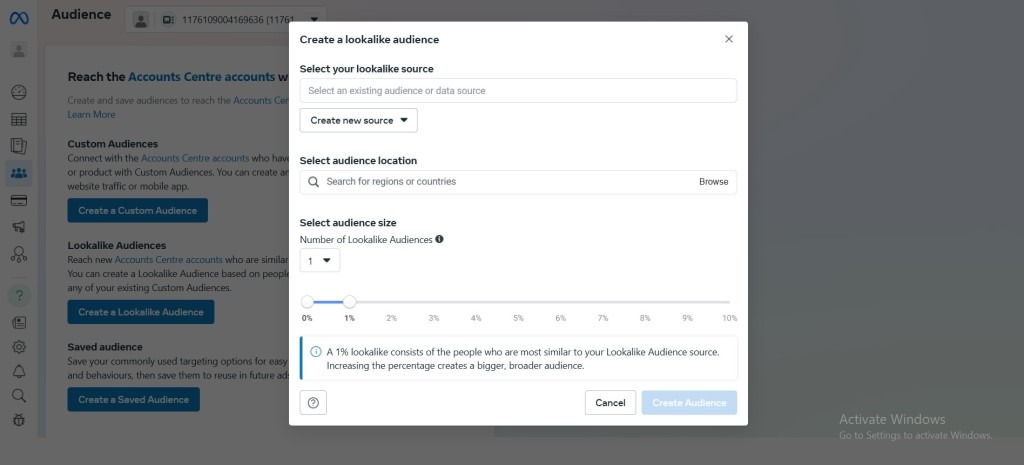
6. Ignoring Lookalike Audiences
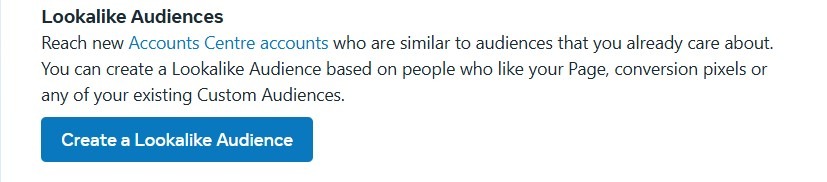
Lookalike Audiences lets you reach new people who are similar to your best customers. You will be losing lots of predictable sales if you keep ignoring them.
How to use Facebook Lookalike audiences better:
- Create 1% Lookalikes (the most similar) for high conversion rates.
- Experiment with 2% and up to 10% Lookalikes for broader reach.
- Base Lookalikes on high-value Custom Audiences (e.g., past buyers).
7. Overlapping Audiences (Competing Against Yourself)
Did you know your own ads can bid against each other? This happens when you have multiple ad sets targeting similar audiences.
When ad sets from the same advertiser end up in the same auction, Facebook enters the one with the best performance history and prevents the others from competing to get shown.
They do this so that your ads are not competing against each other, which can drive up costs and lead to inefficient use of your ad budget.
Although, it’s best to avoid overlapping yourself. Facebook doesn’t always do a good job of prevention. You can prevent overlapping audiences in your campaign by:
- Using Facebook Audience Overlap Tool to check for duplicates.
- Merging similar audiences into one ad set.
8. Targeting the Wrong Locations
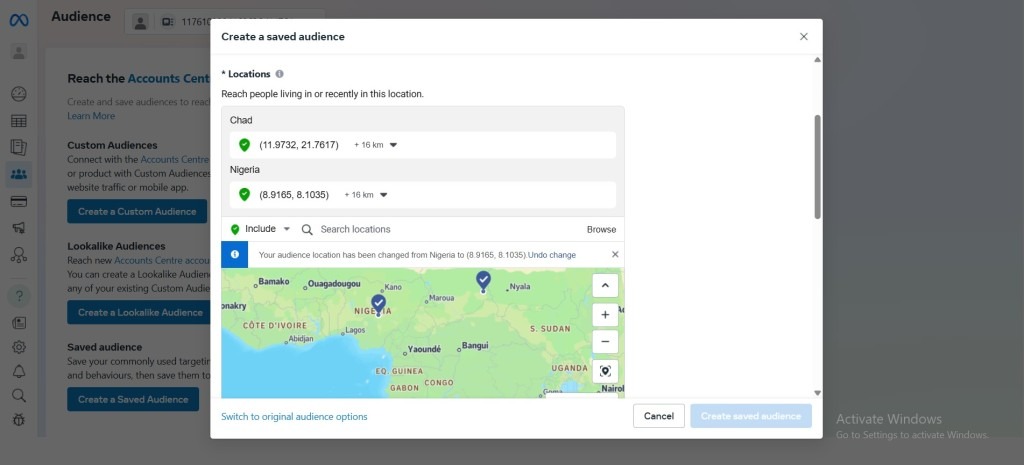
Facebook lets you target entire countries or small local areas. If you’re targeting people who can’t even buy from you due to distance or international restrictions, you’re wasting money.
Use Radius Targeting for local businesses. If you sell online, exclude regions where shipping is unavailable.
9. Not Targeting Buyer Intent Signals
Instead of targeting general audiences that might result in misplaced ad spend, it’s beneficial to target audiences that are actively looking to buy.
You can use Facebook’s “Engaged Shoppers” behavior, i.e people who recently clicked “Shop Now” to narrow down for an ecommerce ad campaign for better optimization.
Also, try retargeting users who abandoned checkout. This way, you are revisiting warm leads that have interacted with your offering.
10. Ignoring Ad Fatigue (Over-Showing Ads to the Same People)
If the same audience sees your ad too many times, they’ll stop engaging. Try keeping your ad frequency below 3-4. Additionally, rotate ad creatives every 7–10 days to keep things fresh.
The ten mistakes above are causing you big losses in your finances and in your ad goals. I have provided you with solutions you can jump on quickly and start reaping where you’ve rightfully sown.
Fix Your Targeting & Start Winning
Facebook Ads don’t have to drain your budget. You need to fix these mistakes, and start seeing real results. If your Facebook Ads are not converting, it’s likely due to poor targeting.
Here are some quick fixes to help you target your ads better;
- Avoid broad, untargeted audiences.
- Use Custom Audiences and Lookalikes for precise targeting.
- Test multiple segments and refine based on data.
Frequently Asked Questions (FAQs) on Facebook Ads
1. How can I lower my Facebook Ads cost?
To reduce Facebook Ads costs, focus on:
- Better Targeting
- Ad Relevance
- A/B Testing
- Optimized Bidding
- Ad Frequency Management
2. What’s the biggest Facebook Ads targeting mistake?
The most common mistake is targeting too broad an audience. In certain cases, when your audience is too large, Facebook struggles to find high-quality prospects, leading to wasted ad spend. Instead:
3. How do I find my best audience for Facebook Ads?
To identify the most profitable audience:
- Start with Custom Audiences
- Expand with Lookalike Audiences
- Refine with Interest and Behavioral Targeting
- Analyze Performance
4. Why are my Facebook Ads so expensive?
Your Facebook Ads cost more if:
- Your targeting is too broad
- Your ad relevance score is low
- Your market is too competitive
- Your bid strategy is inefficient
5. Should I use Interests or Lookalike Audiences for targeting?
Lookalike Audiences are better for scalability since they’re based on your actual customer data, while Interest Targeting works well for new brands or niche targeting but can be hit or miss. The best strategy is to start with Lookalikes, then refine with Interests for more precision.

I write like I talk - curious, At Hydra-Scola, amongst other things, I obsess over why campaigns click.