Facebook Ads vs Google Ads
Facebook Ads and Google Ads are the two of the biggested advertising giants you’ve likely come across if you have tried learning how to grow your business online.
Both platforms have revolutionised digital marketing, offering businesses of all sizes a way to reach potential customers.
But which one is best for you?
This guide will explain everything you need to know about Facebook Ads and Google Ads, including how they work, their strengths and weaknesses, and how to choose the right one for your business.
Whether you’re a beginner or looking to optimise your campaigns, this article will bring you up to speed.
What Are Facebook Ads?
Facebook Ads is a social media advertising platform that allows businesses to display targeted ads across Facebook, Instagram, Messenger, and the Audience Network.
These ads appear in users’ feeds, stories, and even within Facebook’s Marketplace.
What sets Facebook apart is its ability to target users based on their interests, behaviours, demographics, and engagement history rather than direct search intent.
This makes Facebook Ads ideal for brand awareness campaigns, engagement-driven content, and visually compelling ads.
Businesses can create immersive ad experiences using images, videos, carousel ads, and interactive formats to capture users’ attention while they scroll through social media.
What Are Google Ads?
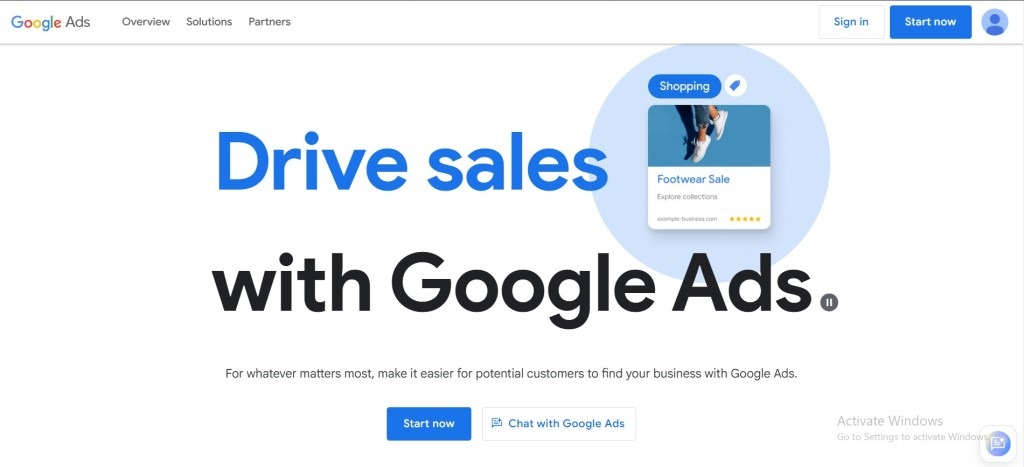
Google Ads is a pay-per-click (PPC) advertising platform that allows businesses to display ads on Google’s search engine results pages (SERPs), YouTube, Gmail, Google Play Store and other partner websites through the Google Display Network.
Unlike Facebook, where ads are shown to users based on their interests, Google Ads primarily targets users based on search intent.
This means when someone types a query into Google (e.g., “best running shoes”), businesses can bid to have their ads appear at the top of the search results.
This makes Google Ads highly effective for capturing demand and driving direct conversions, as users searching on Google often already have an intent to purchase or take action.
Key Differences Between Facebook Ads and Google Ads
| Feature | Google Ads | Facebook Ads |
| User Intent | High-intent searchers | Passive discovery |
| Best For | Lead generation, direct sales | Brand awareness, engagement |
| Cost | Higher CPC | Lower CPC |
| Ad Placements | Search, Display, YouTube, GMail | News Feed, Stories, Messenger |
| Conversion Rate | 3.75% (Search), 0.77% (Display) | ~1.85% |
| Targeting | Keyword & intent-based | Demographic & behavioral |
Facebook Ads and Google Ads are powerful digital advertising platforms, but they serve different purposes and are designed to achieve different marketing goals.
When you understand their key differences, it can help businesses maximize their advertising ROI.
1. User Intent
Google Ads: High-Intent Audience
Google Ads target users based on what they are actively searching for. When someone types a query into Google, they usually have a specific need or intent, making them more likely to convert.
For example, a user searching for “best running shoes for marathon training” is likely in the market for new shoes, making Google Ads effective for direct sales.
Facebook Ads: Passive Discovery
On the other hand, Facebook Ads target users based on their interests, behaviors, and demographics.
These ads appear in users’ feeds while browsing social media, rather than actively searching for a product.
This makes Facebook Ads more suitable for brand awareness and demand generation than direct conversions. For example, a user who follows fitness pages may see an ad for running shoes even if they haven’t searched for them yet. There may be interest regardless, but there isn’t always high and recent intent.
2. Ad Placements & Formats
Google Ads:
- Search Ads appear at the top of Google search results.
- Display Ads are shown on websites within the Google Display Network (GDN).
- YouTube Ads run before, during, or after videos. Or appear as cards and text under videos
- Gmail Ads appear in users’ inboxes.
Facebook Ads:
- News Feed Ads appear in the Facebook and Instagram feeds.
- Stories Ads are full-screen ads on Facebook and Instagram Stories.
- Messenger Ads appear in Facebook Messenger.
- Audience Network Ads extend reach beyond Facebook onto third-party apps and websites.
3. Cost & Pricing Model
Google Ads: Cost-Per-Click (CPC)
Google Ads typically operate on a cost-per-click (CPC) basis, meaning advertisers pay only when a user clicks on their ad.
The average CPC varies by industry. Highly competitive industries like legal services can charge as high as $6–$50 per click, while eCommerce see lower CPCs around $0.50–$2.00 per click. (CPCs differ from market to market. Third world countries usually enjoy lower CPC costs compared to First World countries)
Facebook Ads: Multiple Pricing Models
Facebook Ads offer more flexible pricing models:
- Cost-Per-Click (CPC) – Pay when someone clicks on the ad.
- Cost-Per-Thousand Impressions (CPM) – Pay per 1,000 views.
- Cost-Per-Engagement (CPE) – Pay based on user interactions like shares, likes, and comments. The average CPC for Facebook Ads is around $0.97 per click, while the average CPM is around $7.19 per 1,000 impressions.
(CPCs differ from market to market. Third world countries usually enjoy lower CPC costs compared to First World countries)
4. Targeting Capabilities
Google Ads: Keyword & Intent-Based Targeting
Google Ads use keywords to target users based on search intent. Businesses can refine targeting using:
- Exact Match, Phrase Match, and Broad Match keywords
- Geolocation targeting
- Device targeting
- Audience segments based on previous interactions (remarketing)
Facebook Ads: Demographic & Psychographic Targeting
Facebook Ads excel in targeting capabilities by allowing advertisers to:
- Target users based on age, gender, location, education, and relationship status
- Use interests and behavior-based targeting (e.g., users who like fitness pages or frequently shop online)
- Create Custom Audiences based on previous website visitors or email lists
- Use Lookalike Audiences to find new customers similar to existing ones
Click Here to See: What are Custom Audiences and How To Use Them In Facebook Ads (Internal Link goes here)
5. Conversion Rate & Click-Through Rate (CTR)
Google Ads: Higher Conversion Rate
Since Google Ads target high-intent users, they tend to have higher conversion rates. The average conversion rate for Google Ads across industries ranges from 3.75% to 0.77% among search and display ads.
Facebook Ads: Lower Conversion Rate but Higher Engagement
Due to their passive nature, Facebook Ads tend to have lower conversion rates. The average conversion rate for Facebook Ads is 1.85% in eCommerce, but it varies widely across industries.
However, they excel in engagement, with some industries seeing click-through rates (CTR) as high as 1.5%–3%.
6. Visual vs. Text-Based Ads
Google Ads: Text-Focused
Google Search Ads primarily rely on text and minimal visuals. However, Display Ads and YouTube Ads allow for rich media content.
Facebook Ads: Highly Visual
Facebook Ads use visual content, such as images, videos, carousels, and slideshows, to capture user attention. Video ads perform exceptionally well, with engagement rates 10 times higher than static images.
7. Best Use Cases
Google Ads is Best For:
- High-intent lead generation – Users searching for solutions
- eCommerce – Selling products with strong purchase intent
- Local businesses – Driving foot traffic through search queries like “near me”
- B2B marketing – Reaching professionals searching for solutions
Facebook Ads is Best For
- Brand awareness & storytelling – Engaging users through compelling visuals
- Social commerce – Influencing purchases through discovery
- Lead generation – Using lead forms to collect contact details
- Retargeting & remarketing – Showing ads to users who interacted with your brand
Facebook Ads and Google Ads offer unique advantages depending on your marketing goals. If you want to capture high-intent leads and drive direct sales, Google Ads is the better choice.
If you focus on brand awareness, engagement, and audience building, Facebook Ads provide a more effective solution.
Businesses often benefit from using both platforms strategically to maximise reach and conversions.
Cost Comparison: Facebook Ads vs Google Ads
The average CPC on Google Search Ads is between $1 and $2, but it can rise significantly in competitive industries. Facebook Ads tend to have a lower CPC, ranging from $0.50 to $1.50, making them a more affordable option for businesses looking to drive traffic at a lower cost.
(CPCs differ from market to market. Third world countries usually enjoy lower CPC costs compared to First World countries)
However, conversion rates tell a different story. The average conversion rate for Google Search Ads is around 3.75%, compared to Facebook Ads, which have a conversion rate of approximately 1.85%.
This highlights how Google Ads are better at capturing users already in a buying mindset, while Facebook Ads excel in reaching and engaging new audiences who may convert later.
Advantages of Facebook Ads
- Advanced audience targeting
- Lower cost per click
- Highly visual and engaging ad formats
- Great for brand awareness and lead generation
Disadvantages of Facebook Ads
- Lower conversion rates
- Requires more creative assets
- Users may not have buying intent
Advantages of Google Ads
- High-intent audience leads to better conversions
- Strong presence on search engines
- Effective for local businesses and eCommerce
- Works well for direct sales and lead generation
Disadvantages of Google Ads
- More expensive per click
- Competition can be high in certain industries
- Requires ongoing optimization to remain cost-effective
Google Ads or Facebook Ads: Which Should You Choose?
The answer depends on your business goals.
Facebook ads are the better choice if your objective is to generate brand awareness, engage audiences, and create demand for your product.
It works well for businesses in industries with strong visual appeal, such as fashion, travel, and food, where compelling images and videos can drive engagement.
Google Ads is the ideal platform for capturing high-intent users and driving direct conversions.
It’s effective for eCommerce, service-based industries, and local businesses looking to appear at the top of search results when customers are actively looking for solutions.
The best approach is not choosing one over the other. It’s using both strategically. Many successful businesses use Google Ads to target high-intent searches while leveraging Facebook Ads for retargeting and audience expansion.
This combined approach helps businesses cover the full buyer journey, from initial awareness to final conversion.
Final Thoughts
Both Facebook Ads and Google Ads offer unique advantages, and the best choice for your business depends on your marketing objectives, budget, and audience behavior.
While Google Ads provide immediate access to high-intent customers, Facebook Ads offer unparalleled targeting capabilities for engagement and brand building.
For businesses serious about maximizing their online advertising efforts, a hybrid strategy that incorporates both platforms is often the most effective approach.
By leveraging Google’s search intent targeting alongside Facebook’s powerful audience-building capabilities, businesses can create a well-rounded marketing strategy that drives long-term growth.

Elsie Udoh is a writer who transformed her love for talking into a career. You can easily tell that she talks a lot by how her paragraphs flow.
She’s big on clarity, connection, and helping people learn something new without getting bored halfway through.